.jpeg)

Tucked within the tranquil waters of Inner Port Shelter in Sai Kung, Sharp Island is one of Hong Kong's most remarkable marine biodiversity hotspots, home to thriving coral communities, diverse fish species and an array of benthic organisms that underpin the health of our coastal ecosystems. Yet every summer, a surge in recreational visitors places growing pressure on these fragile, slow-growing habitats. WWF-Hong Kong has long identified Sharp Island and the surrounding Inner Port Shelter as a marine conservation priority. Over the years, our team has conducted regular diving surveys (2021–2024) and run citizen science prgoramme, industry collaborations such as Mind Your Fins campaign, advocating for stronger and more enduring protection of this unique marine environment.
This summer marks a significant step forward. Appointed by the Agriculture, Fisheries and Conservation Department (AFCD), WWF-Hong Kong is collaborating with AFCD in launching a series of demonstration-based, on-site conservation and public education actions at Sharp Island, complementing the government’s enhanced management and patrolling efforts in the area. The initiative is timely: the Government has listed the conservation of Sharp Island as a priority action under the Hong Kong Biodiversity Strategy and Action Plan 2035 (BSAP). Through these on-the-ground actions, WWF hopes to contribute practical experience and on-site insights that can help inform more comprehensive coastal conservation and management measures in the future.
Our work is structured around two complementary pillars: on-site management and public education, with a focus on guidance, capacity building and education at every point of contact. A dedicated team of WWF staff, Ocean Ambassadors and professional guides are deployed across Sharp Island throughout public holidays from May to October 2026. Working alongside AFCD to formulate "coral-safe routes", the team installs floating buoys to clearly mark ecologically sensitive shallow coral areas as no-entry and no-exit zones, and to guide snorkellers and kayakers to choose entry and exit points such as sandy areas to avoid causing impact to corals.
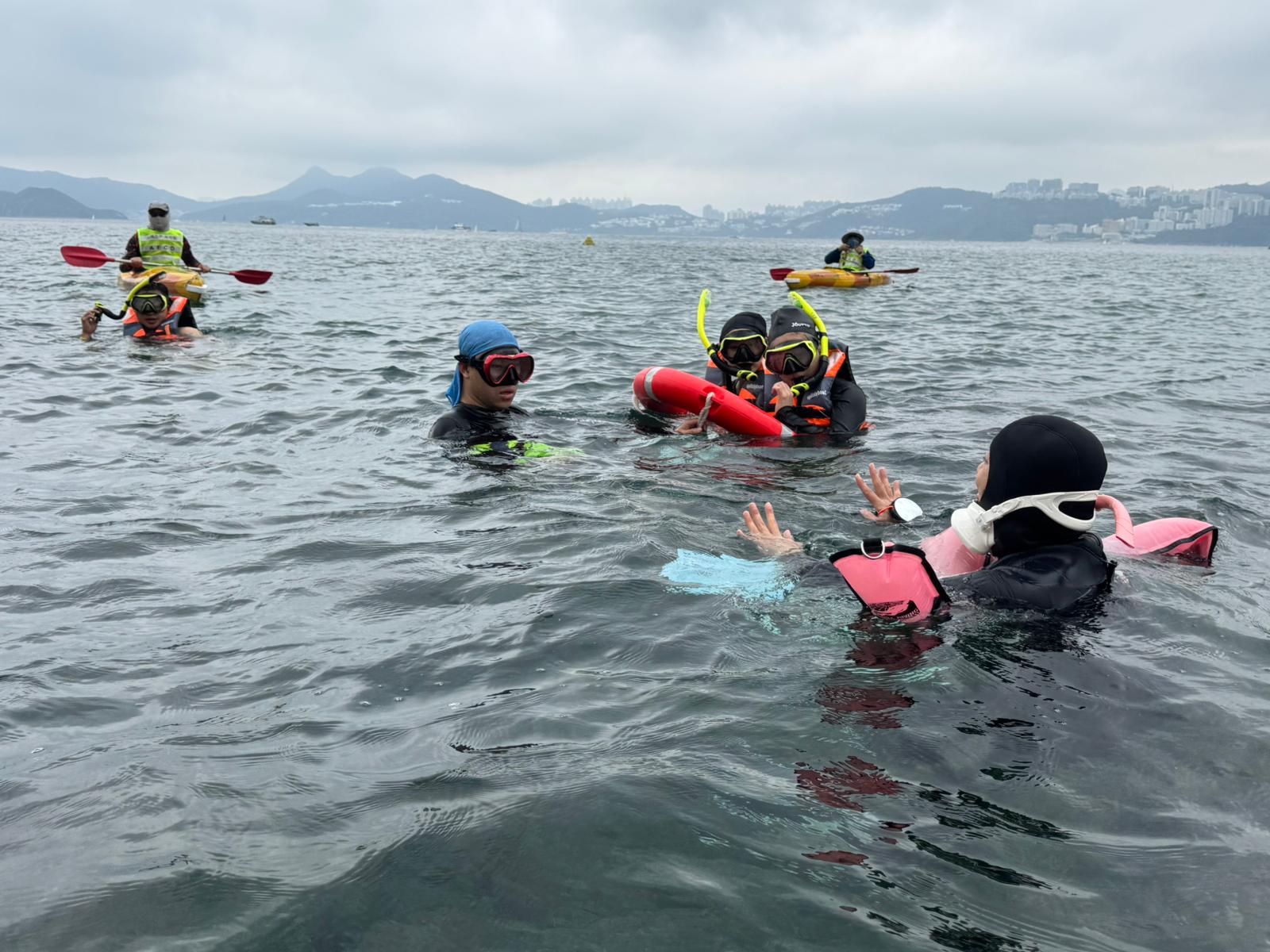
WWF Ocean Ambassadors provide on-water guidance to snorkellers at Sharp Island, directing visitors away from ecologically sensitive coral zones throughout the summer public holidays.
Education booths are set up at strategic location in Sharp Island. The interactive activity about corals are well received by visitors, many share that they had never before understood what corals look like beneath the surface, a reminder that even well-meaning visitors can inadvertently cause harm. Our conservation ambassadors also conduct proactive shoreline outreach, explaining not just what responsible behaviours look like, but why they matter. Core messages include: do not touch or collect marine life, and leave no trace etc.
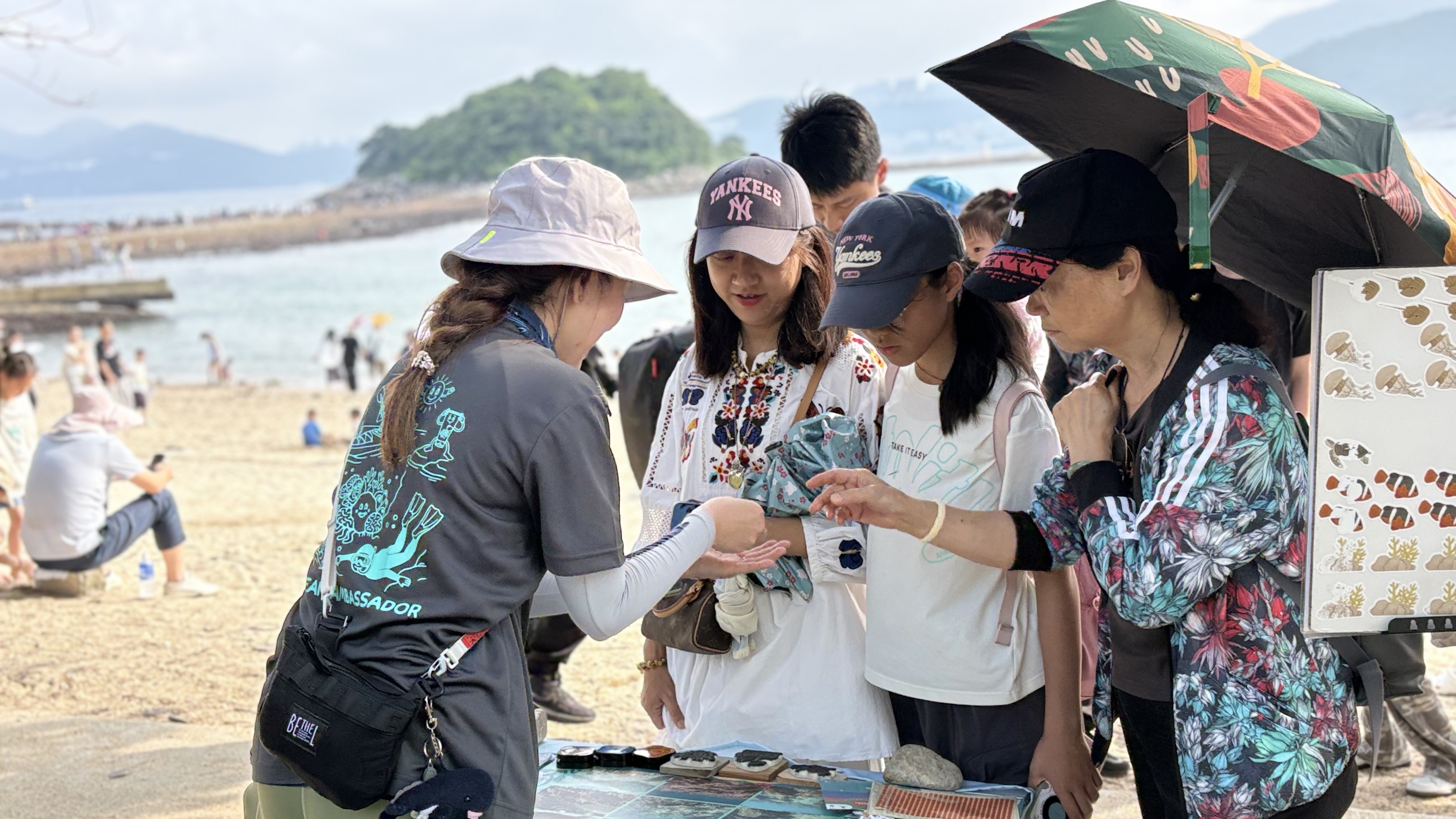
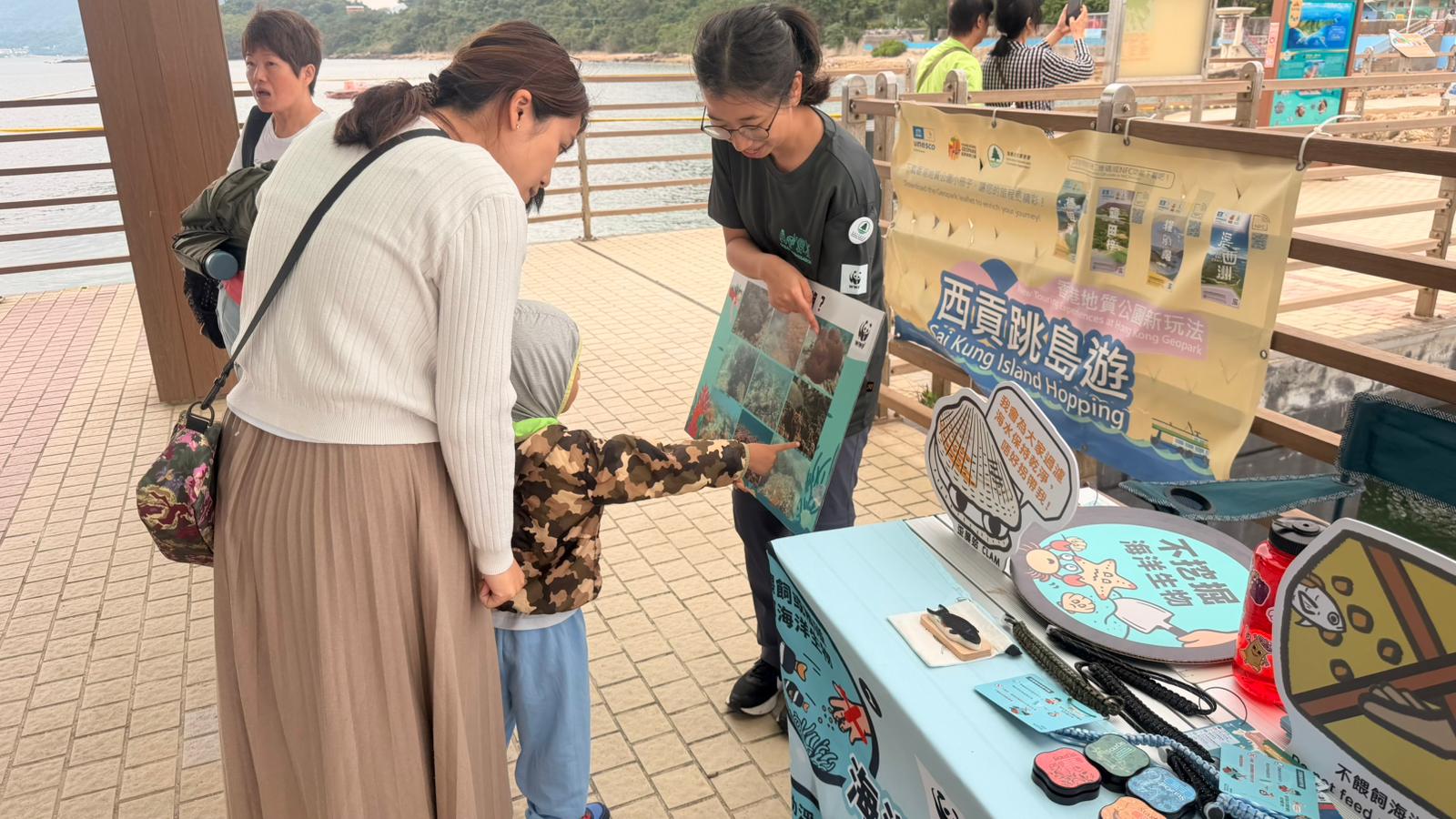
Visitors at Sharp Island's education booth try their hand at identifying corals — a simple but powerful first step in fostering ocean-friendly behaviour.
Most snorkelling visitors arrive in organised groups, and received pre-briefing by their group leaders. Our team has prior engaged with the key snorkelling operators, waterproof information cards have been equipped to these key players, to help group leaders illustrating coral-safe route and key precautions. Independent visitors, particularly those with less experience, are more prone to inadvertently entering unsuitable areas, and making on-site WWF guides for real-time guidance more important, include using gears properly, appropriate posture to entre water etc. Within the areas covered by the joint deployment, no coral disturbance was observed. Encouragingly, most visitors have been cooperative and receptive, reflecting a genuine public willingness to protect what they come to enjoy.
This encouraging response demonstrates that people care about Hong Kong's ocean. Yet voluntary action alone cannot guarantee the long-term recovery of marine biodiversity. A robust, legally binding statutory framework remains essential. WWF-Hong Kong calls for broad support for the designation of a Marine Park at Sharp Island to provide statutory protection for its ecologically sensitive core areas and adopt effective visitor management into the management plan. WWF also urges active consideration of Other Effective Area-based Conservation Measures (OECMs) for the wider Inner Port Shelter. We look forward, with genuine optimism, to seeing that the designation of marine park become a reality soon, and to securing a lasting future for one of Hong Kong's most precious marine habitats.

Together with AFCD, floating buoys are installed to guide snorkellers and kayakers away from entering and exiting through shallow, ecologically sensitive coral areas.
.jpg)