.jpeg)

For many young people interested in conservation, classroom is where their journey begins, academic learning provides a solid theoretical foundation. Yet the realities of conservation work are best discovered beyond the classroom, where hands-on experience in nature brings theory to life.
With the support of The Hong Kong Jockey Club Charities Trust, WWF-Hong Kong launched the Mai Po Mentorship Programme in March 2026. Through mentor matching and hands-on fieldwork, the programme provides young people a deeper understanding of what conservation and environmental education work really involves.
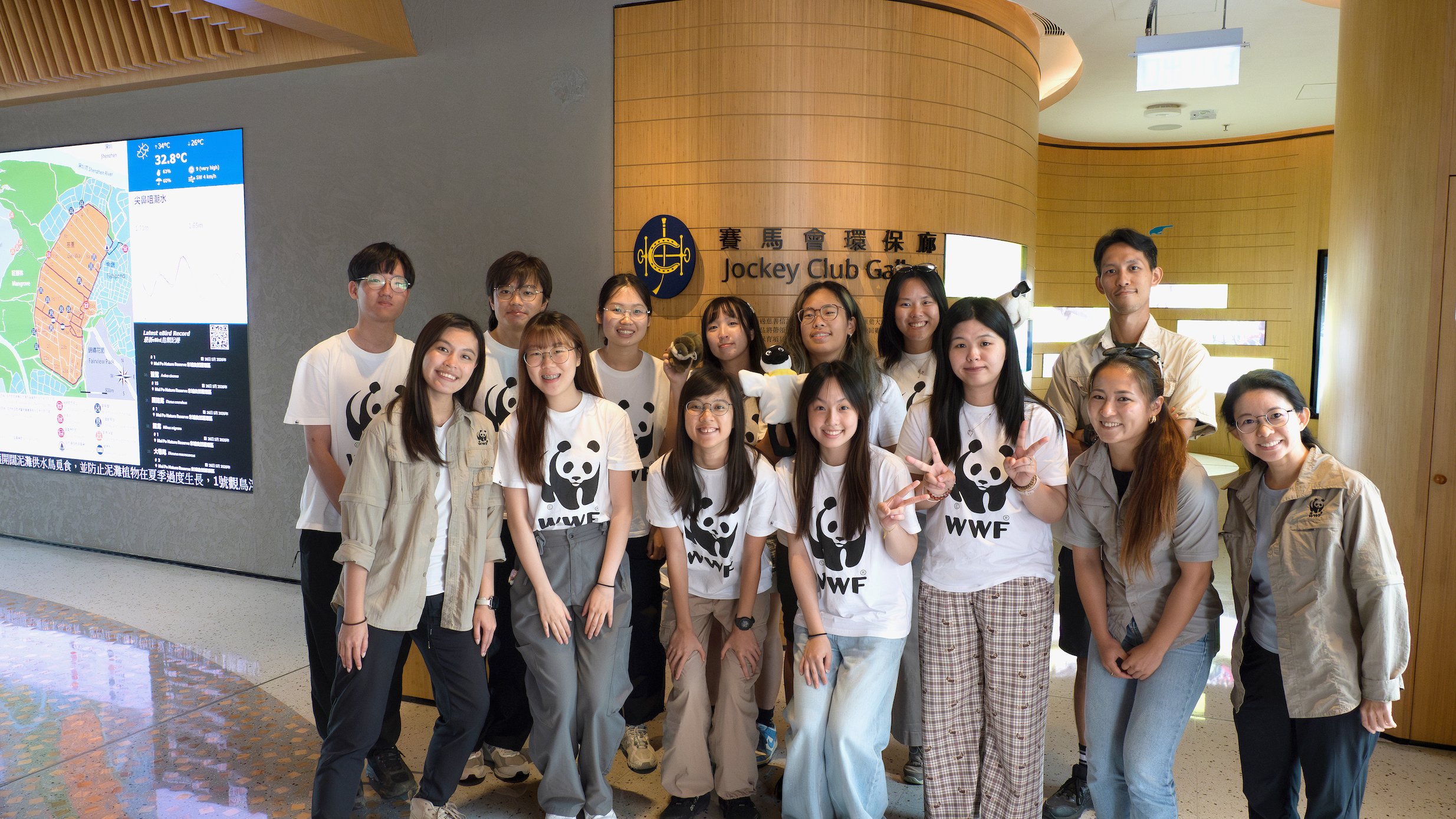
All mentees and mentors in the first cohort of the programme.
Mr. Yamme Leung, Director of Education of WWF-Hong Kong, said: "Cultivating a new generation of green talent is critical as we face global challenges such as climate change and biodiversity loss. By offering authentic workplace experience, we hope to help young people explore green careers and build professional networks, supporting their personal growth while nurturing the talent Hong Kong needs for nature conservation and sustainable development."
Eleven mentees completed the first three-month cohort of the programme. Beyond gaining valuable workplace experience, they were guided by WWF conservation and education staff throughout, a journey that led many to reconsider what conservation means to them, and where their own paths might lead. We spoke to three mentees, Kelvin Wong, Jovianne Lau and Jasmine Luo, about what they learned and how they grew.
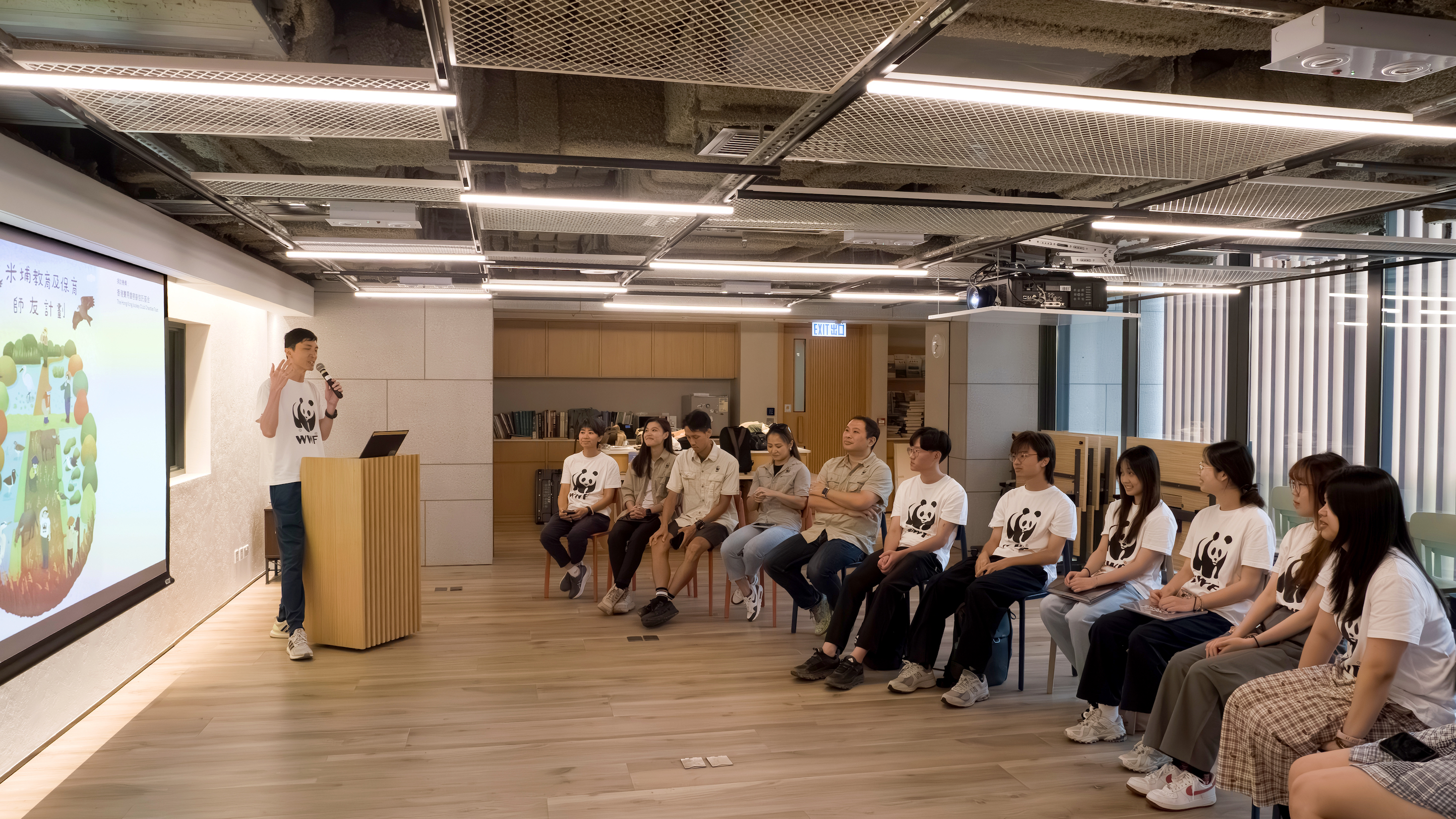
Training workshops on conservation practices provided mentees with hands-on insights into the skills and techniques used in practical conservation work.
For all three mentees, the most meaningful lessons came from experiences outside the classroom, moments that reshaped how they understood conservation work in practice.
Jovianne said that taking part in a bird survey taught her that conservation work does not rely entirely on advanced technology. Much ecological monitoring still depends on researchers spending long hours observing, identifying and recording data. The experience gave her a deeper appreciation of the patience, focus and expertise ecological fieldwork demands. "It turns out the most accurate 'tool' isn't necessarily technology. It's the years of observational experience and professional judgement that conservationists build up over time."
For Jasmine, the most memorable experience was stepping outside the classroom to take part in habitat management work. At university, she mostly understood ecosystems through theory and research. At Mai Po, she was able to walk into the wetland itself, observing nature up close and feeling a connection between people and the environment. "When you're actually out in the field, crouching down to be at eye level with the birds, you feel a powerful sense of connection between humans and nature."
Beyond fieldwork, Jasmine also connected with conservationists from the UK, Europe and the US through international online meetings, which revealed another dimension of conservation work to her. "Even though we're scattered across the world, everyone was thinking about a wetland they'd never set foot in, and working together on how to make that place better." This cross-border connection helped her understand that conservation isn't just local work. It's a shared mission requiring global collaboration.
Rather than encountering rare species, Kelvin’s the biggest surprise is meeting such a wide range of people, from primary and secondary school students to university students and senior government officials. While delivering wetland training, he came to understand that conservation isn't about one-way knowledge transfer; it requires empathy and perspective-taking to connect with different audiences and spark their interest in nature conservation. Kelvin also saw real growth in his own communication skills. "Two years ago, I wasn't very good at expressing myself. But through the training and practice in this programme, I've gradually learned to adapt how I communicate depending on my audience."
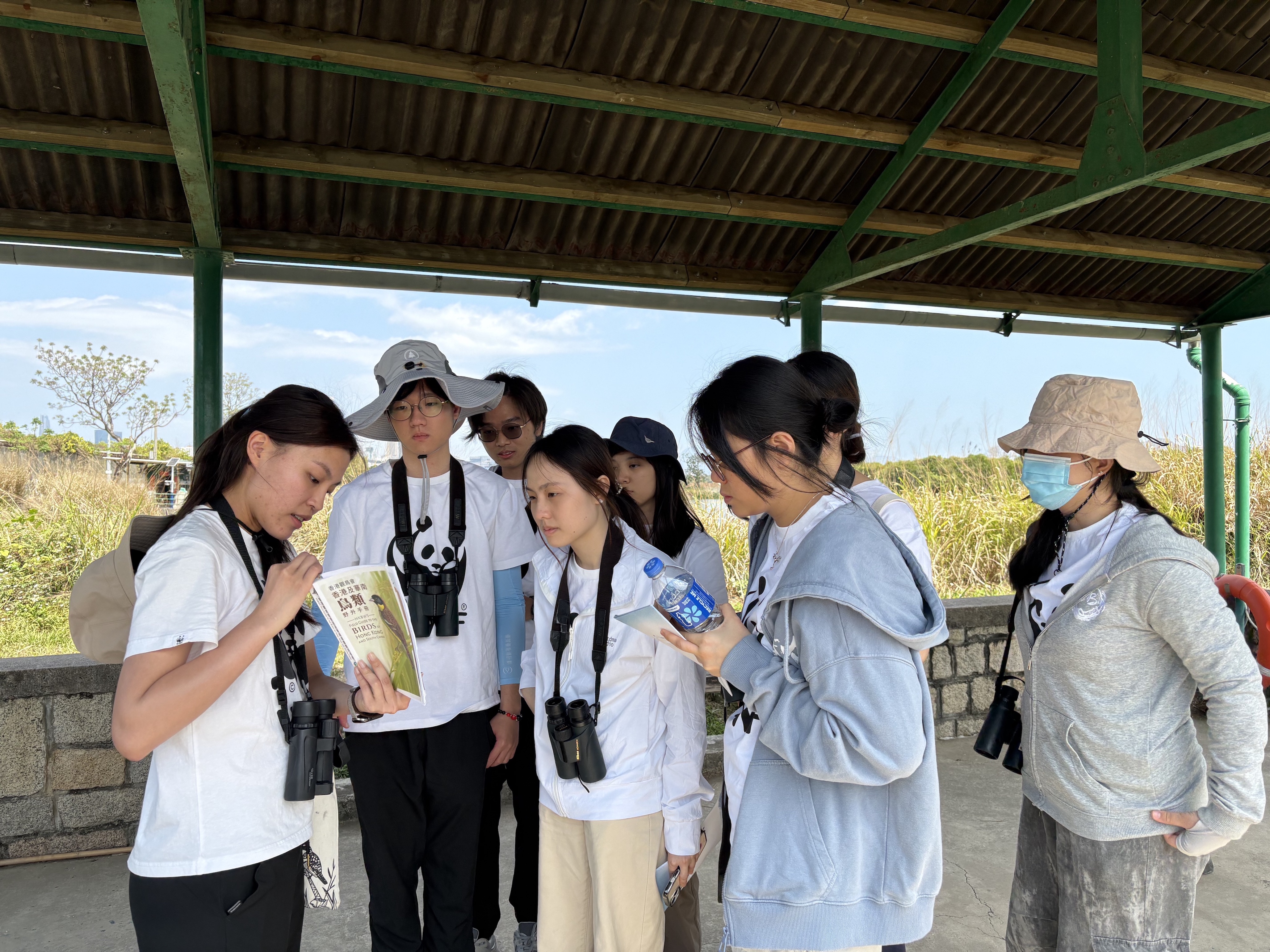
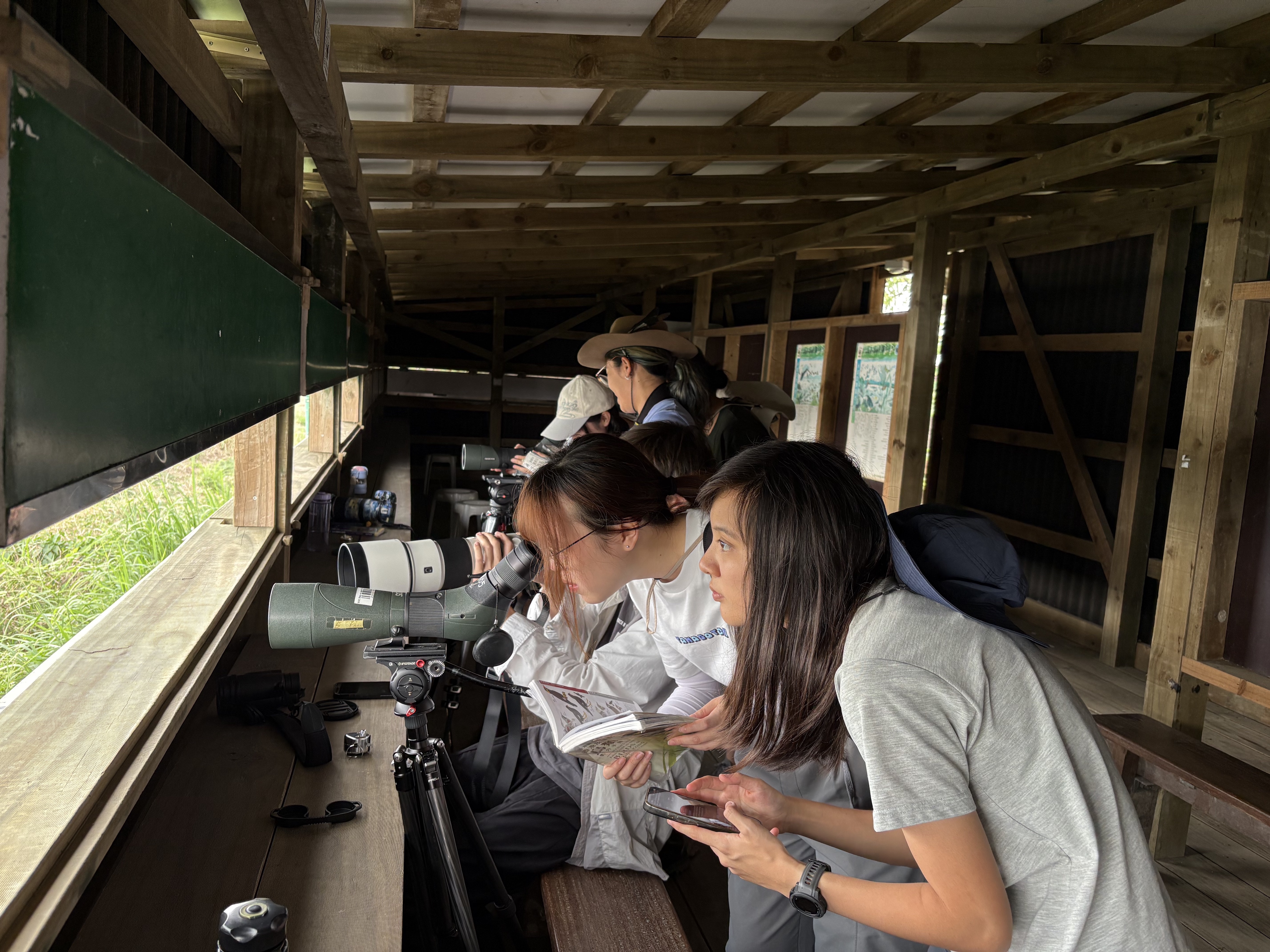
Guided by mentors, mentees participated in the Mai Po bird survey, developing bird identification and ecological survey skills while experiencing the dedication, precision and expertise behind conservation work.
Alongside the mentees' self-discovery and personal growth, the guidance and experience shared by their mentors played an equally important role. In the programme’s first cohort, WWF’s Education and Conservation staff served as mentors, meeting regularly with mentees to share their own reflections on working in conservation, while providing guidance on mentees’ works and communication skills.
As one of the mentors, Vivian Fu, Senior Manager of WWF-Hong Kong's Asian Flyways Initiative, reflected on her own career, from her early research on amphibians to her later work in bird conservation. Over time, she came to realise that conservation is not just about protecting species and habitats, but about understanding different stakeholders' needs and behaviour to drive meaningful, long-term change. "Conservation work isn't only about liking a particular animal and wanting to protect it. What matters more, ultimately, is people." Through the programme, she hoped mentees would understand that conservation has never been purely a natural science. It's a human-centred field requiring cross-regional, cross-cultural collaboration.
As an environmental educator, Karen So, WWF-Hong Kong's Senior Education Officer, believes environmental education is a long-term investment .
Every time she leads participants into nature, she sees it as planting a seed, one that may not sprout immediately, but could one day inspire them to take action for nature in their own way. She encouraged aspiring environmental educators to stay curious and continue experimenting different teaching approaches, since education never has a single right answer.
Through their exchanges with young people, the mentors also gained a deeper understanding of the challenges facing today's youth, including career planning, future prospects and everyday pressures, and hope to draw on their years of experience and networks to create more opportunities for the next generation to explore and grow.
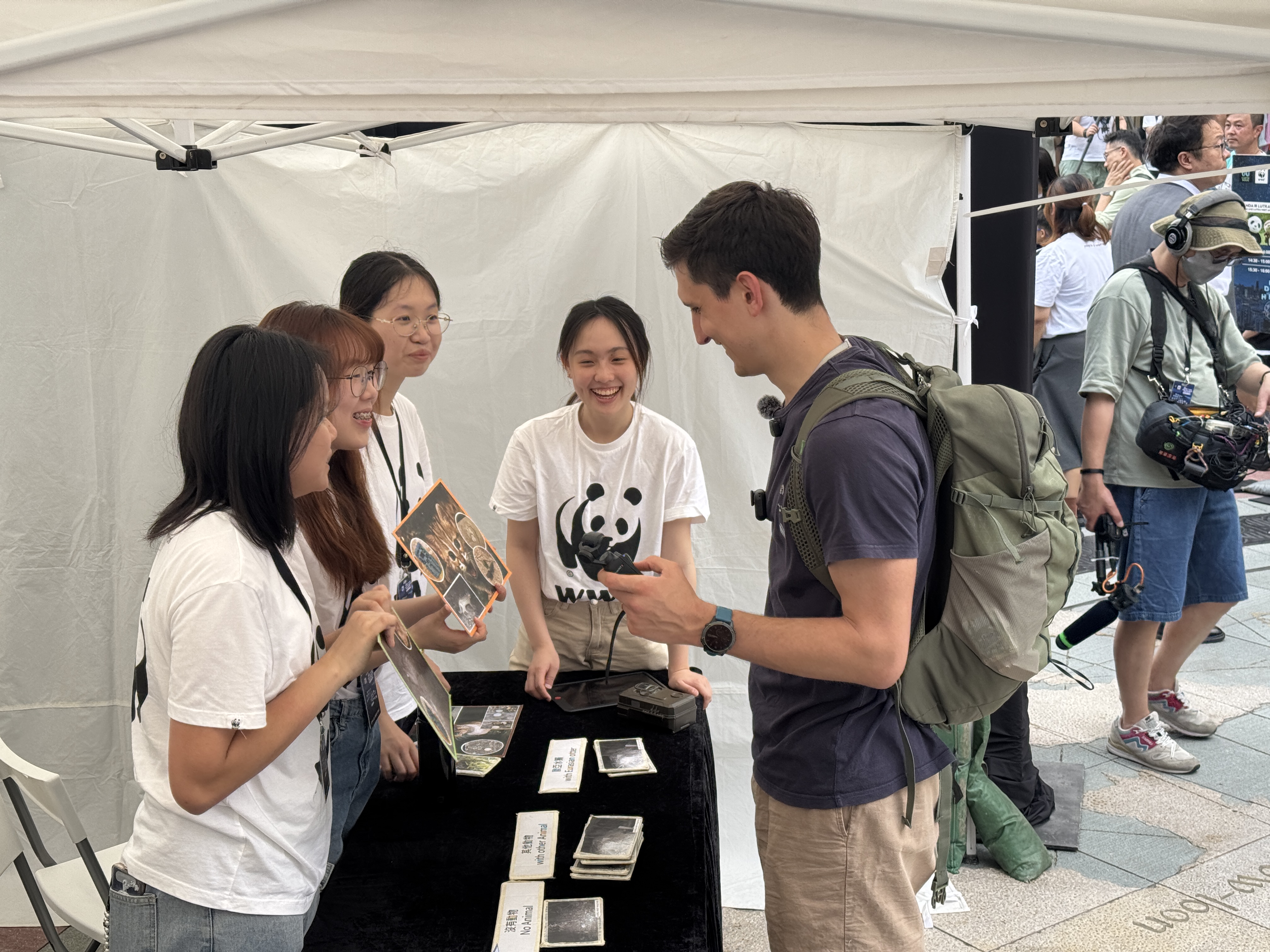
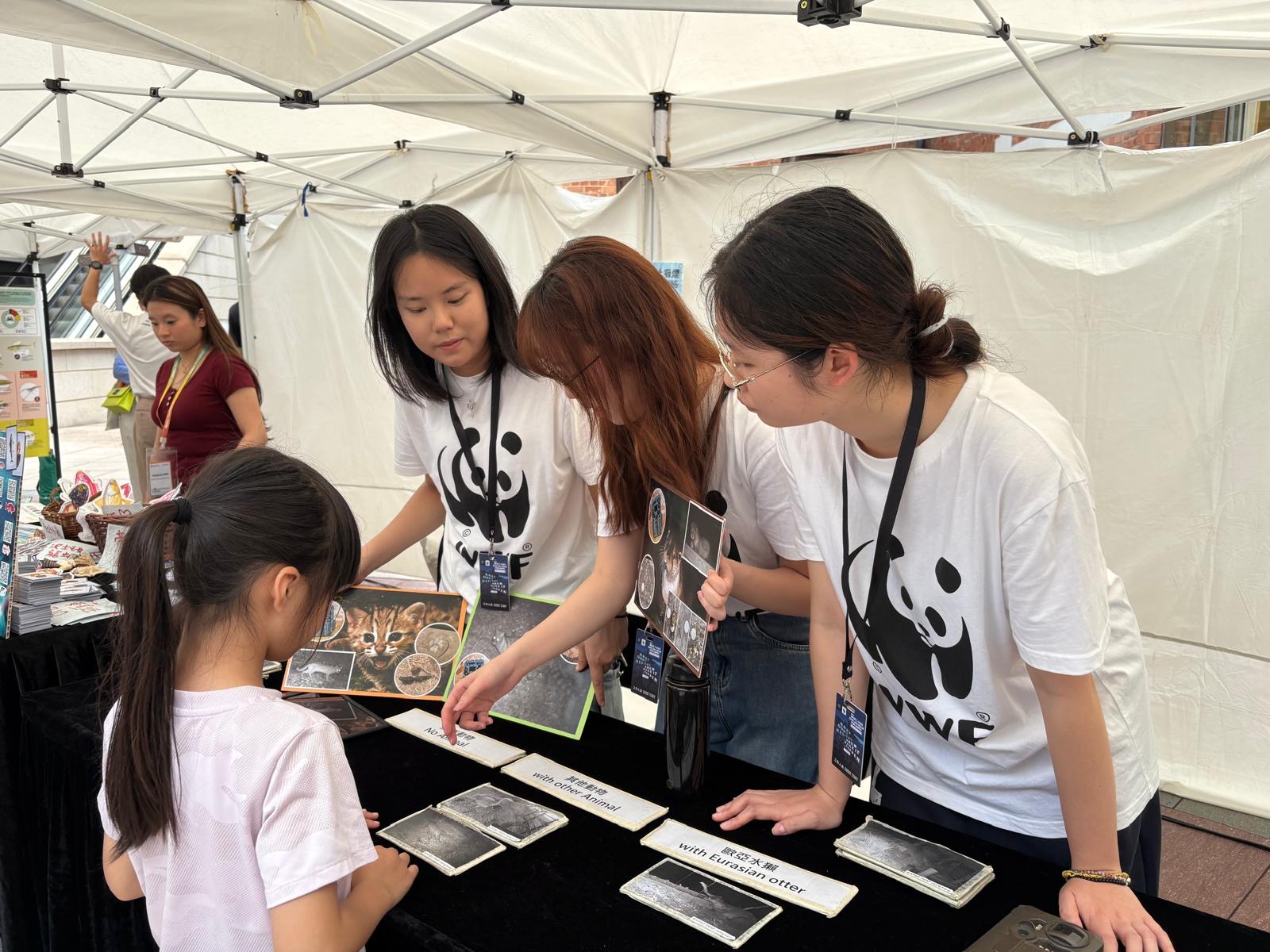
Education plays a crucial role in conservation. During WWF's Earth Hour event, mentees gained first-hand experience in engaging with the public and communicating conservation messages to inspire positive environmental action.
Whether it was Jovianne starting from scratch to explore conservation work, Kelvin discovering more about himself through hands-on practice, or Jasmine's own profound realisations along the way, all three had the same message for young people considering a career in conservation: don't let uncertainty hold you back. Rather than waiting until you feel fully prepared, step into the field and experience the appeal of nature and conservation work for yourself. The next Mai Po Mentorship Programme will launch in September 2026, and interested applicants are encouraged to stay tuned.
.jpg)