Interview|Rooted in Passion: The Young Talents Shaping Conservation's Future

WWF-Hong Kong
Font size:
A
A
A

Meet the next generation of conservationists making waves in Hong Kong's oceans and wetlands

This issue of About Life features two young interviewees: one a Conservation Officer with our Oceans team, the other a Wetlands researcher. Their work looks worlds apart, yet they share the same trait: staying curious, and daring to venture into unfamiliar territory. Guided by that conviction, both found themselves in unexpected places. One moved from academic research into leading coral restoration dives, then community outreach, rallying different sectors behind ocean conservation; the other, after a chance encounter with a book, set out researching wetland waterbirds across China. Both went on to join WWF-Hong Kong's frontline conservation work, growing under mentors and colleagues along the way. The path to conservation, their stories remind us, is rarely a smooth one. As for how these turning points shaped these two rising talents, read on as they tell their stories.

Diving into New Waters

WWF-Hong Kong

Thomas Fong
Senior Conservation Officer, Oceans Conservation, WWF-Hong Kong

Meet Thomas

Thomas is a Senior Conservation Officer with WWF-Hong Kong's Oceans team. He studied Environmental Science at university, a field with no direct connection to the ocean. What truly drew him toward it was learning to dive while staying in Hong Kong during COVID, an experience that not only sparked his passion for marine conservation but also gave him the resolve to commit himself to it. He went on to work (part-time) at a local environmental education organisation, then as a Research Assistant at the Coral Academy at CUHK's School of Life Sciences (the research team of Coral Academy is led by Professor Dr. Apple Chui), before an internship assisting in WWF's diver awareness campaign "Mind Your Fins" led him to join full-time. Today, his work spans coral conservation and restoration, university partnerships, and community outreach across Hong Kong's marine habitats.

From Campus to Coral Community

Q1: How did your work on coral restoration in Tolo Channel, using corals of opportunity rescued from the field, shape your understanding of what conservation work actually involves?

It taught me that conservation is both rewarding and humbling. There's real satisfaction in watching a piece of coral recover, bit by bit, but I also saw how hard-won that progress is: a single severe bleaching event can undo years of effort almost overnight, and the scale one person can achieve stays limited. That tension pushed me to think beyond restoration itself, toward how conservation work could reach further.

Q2: What led you to transition from academic research to field conservation work at WWF?

Academic research lets you dig deep into a specific field, and that training has stayed useful ever since. What really drew me to WWF was the room it gave me to try different approaches and connect with a wider range of partners. WWF's reputation and network also help open up more cross-sector collaboration. I want to put what I have learned into practice, reach more people, and bring together more like-minded conservationists to work towards this together.  
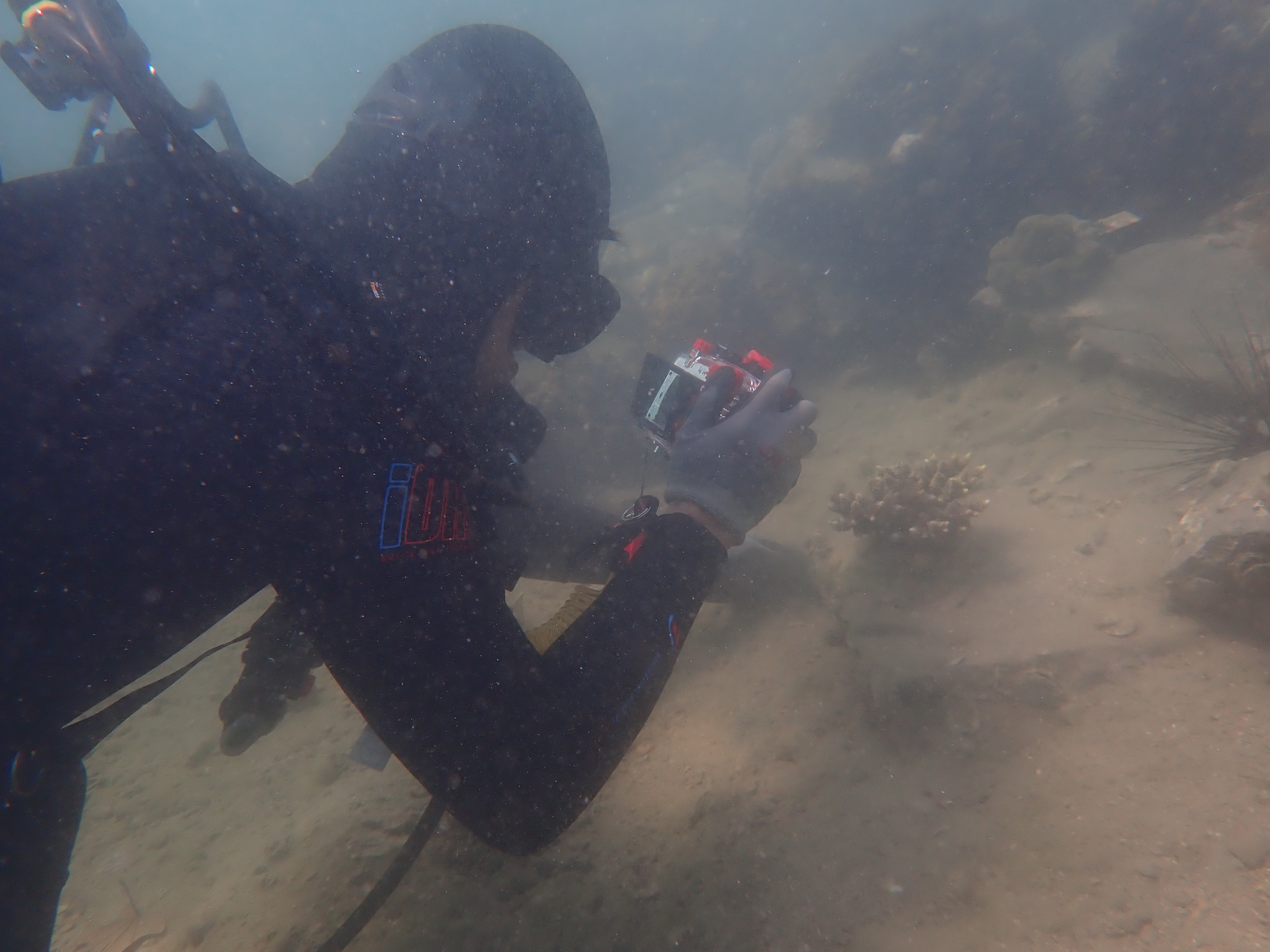
WWF-Hong Kong

Thomas conducts underwater photography at Hoi Ha Wan, documenting the growth of transplanted corals of opportunity.

Between the Sea and the Office

Q3: What does a typical day look like for you as a Senior Conservation Officer in the Oceans Team?

No two days look the same, since I move between two very different bases. At Hoi Ha Wan Marine Park, besides leading coral restoration dives, looking after our coral tanks, running field surveys, and briefing education colleagues on what's happening beneath the surface, I also bridge Hoi Ha Marine Life Centre with eight local universities, helping non-diver researchers collect and identify samples underwater. Back in our headquarter office, the work shifts to data analysis, reports, and outreach planning. We're even training AI with night-vision cameras at Hoi Ha Wan to detect illegal night fishing.
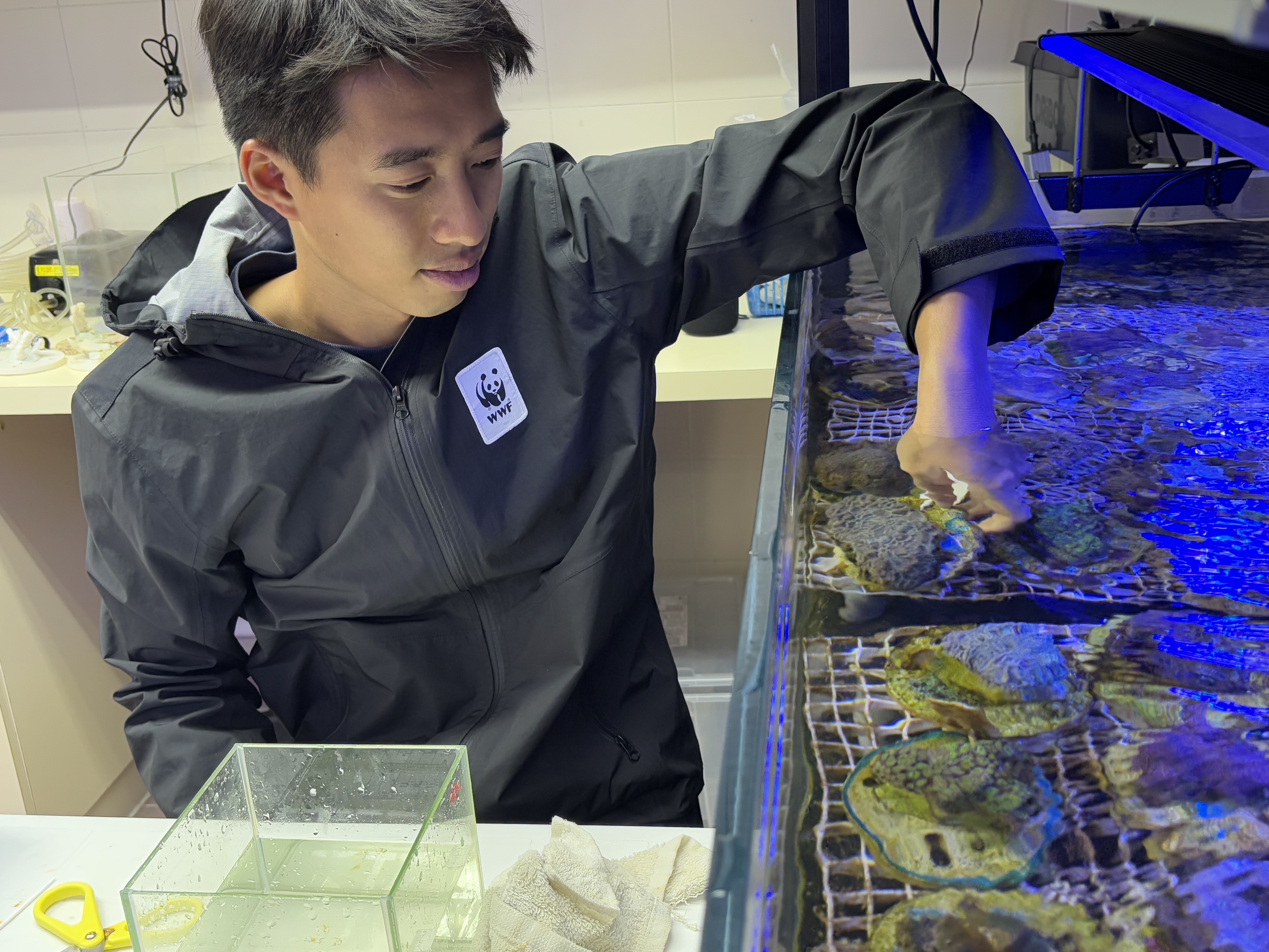
WWF-Hong Kong

Thomas carefully maintains coral tanks at the Hoi Ha Wan Visitor Centre, monitoring the recovery of "coral of opportunity.

Q4: What has been your most memorable or challenging experience in the field so far?

One of the most eye-opening experiences was exchanging with WWF colleagues in Donsol, Philippines, and Bali. During my visit to Donsol, I saw first-hand how a community that once hunted whale sharks transformed into a thriving, sustainable dive-tourism economy, with local operators crediting WWF colleagues in Philippines for their improved livelihoods and expressing strong support for our work. Closer to home, engaging with the snorkelling and kayaking industry was a real challenge, since it was unfamiliar territory, so chairing an industry meeting this year left me genuinely nervous. Fortunately, the meeting ultimately won the industry's support. But seeing the Government list the conservation of Sharp Island as one of the priority actions under the Hong Kong Biodiversity Strategy and Action Plan (BSAP) 2035, and subsequently confirm its inclusion in future marine park planning, knowing that our recommendations played a part in that outcome, is one of the most rewarding moments of my work so far.
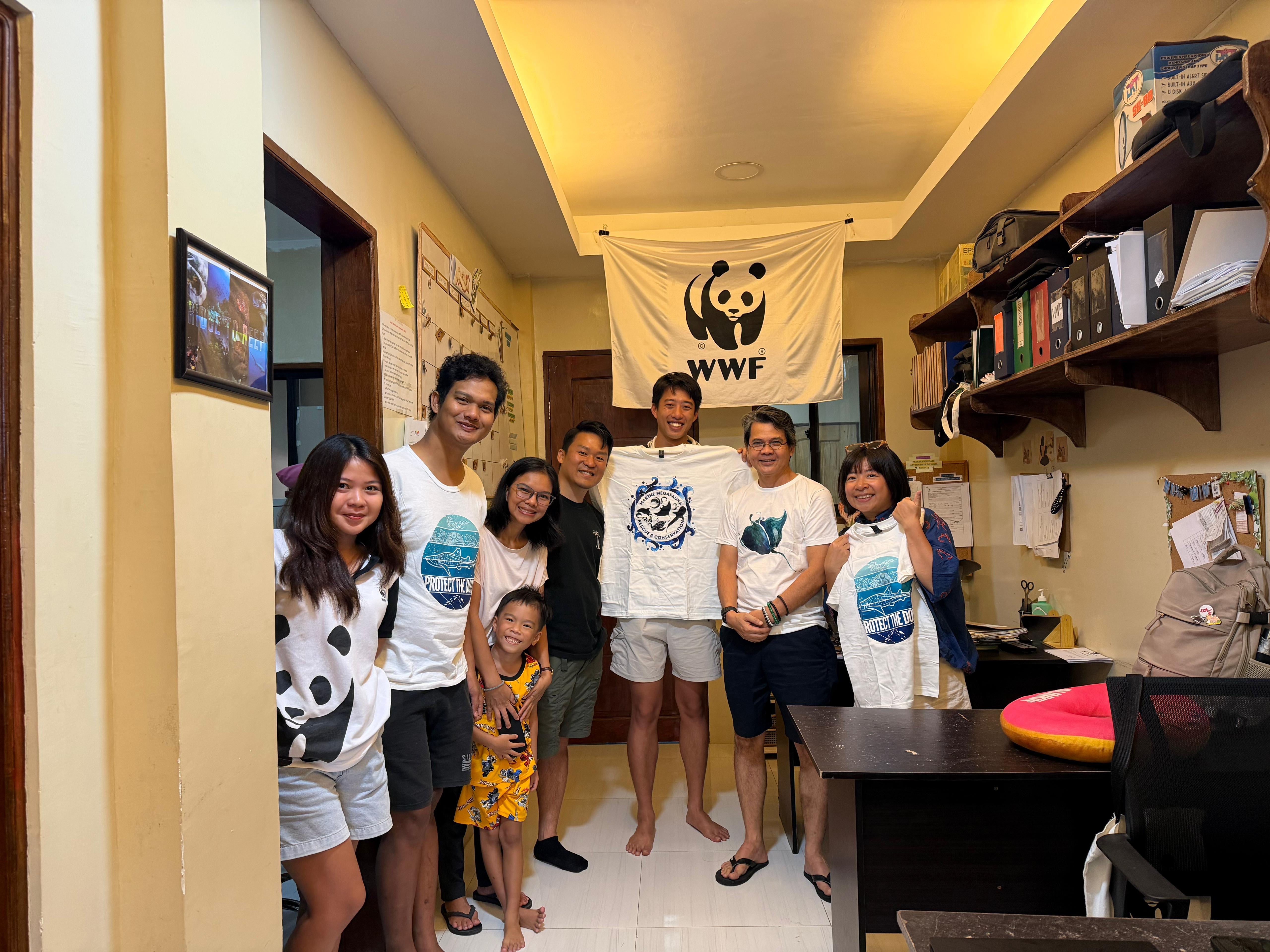
Thomas Fong/TBC

Visiting WWF's local office in Donsol, Philippines, Thomas (centre) witnessed a community once reliant on hunting whale sharks reinvent itself, building a thriving, sustainable dive-tourism economy, a transformation that left a lasting impression on him.

Q5: Coral communities face enormous pressures from bleaching, pollution and development. How do you stay motivated in your work?

It's easy to feel discouraged watching corals bleach again and again. But Hong Kong's corals have shown remarkable resilience, often recovering within two to three months. That resilience isn't something to take for granted, though: coral restoration is essentially a remedial response. Long-term conservation also depends on building coral resilience and biodiversity, so ecosystems become fundamentally stronger. Public support motivates me too: around 90% of our workshop participants are divers, eager to bring conservation practices back into their daily work, spreading the message through a train-the-trainer-like approach.
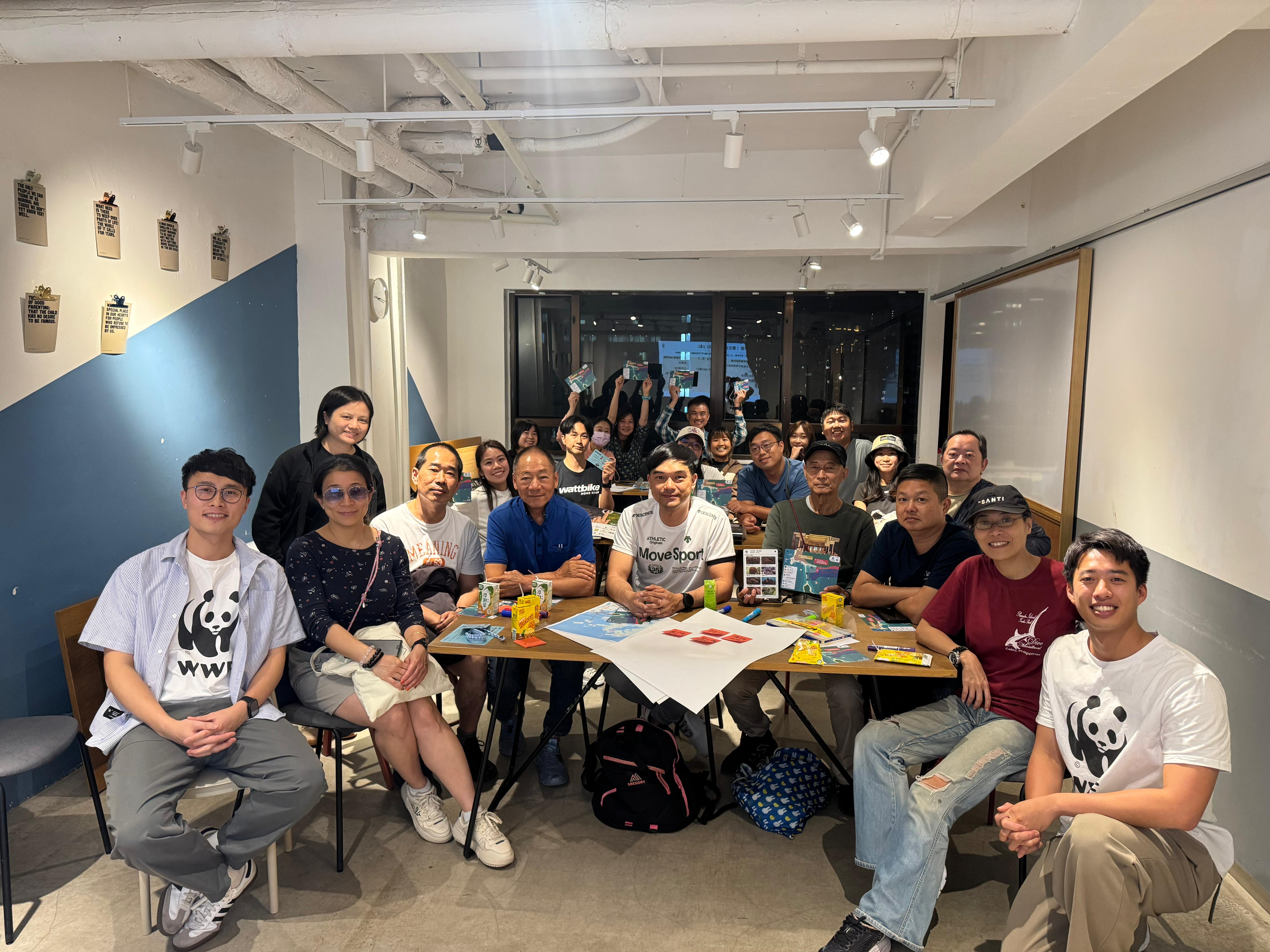
WWF-Hong Kong

Chairing a meeting with representatives of the snorkeling and kayaking industry earlier this year was a first for Thomas, and though he felt nervous at the outset, it became a memorable step outside his usual area of expertise.

Advice for the Next Generation of Conservationists

Q6: What would you say to young people who are passionate about marine conservation but unsure how to take that first step?

Looking back, my own path into conservation was somewhat organic, but it also helped me see clearly where I wanted to go. My advice is simple: don't wait for a perfect plan before starting. Join the workshops and training programmes regularly run by environmental organisations, gain hands-on experience of different sides of conservation, such as fieldwork, education, and research, and take the time to discover where your interests truly lie. Many people think of conservation groups mainly as fundraisers, but organisations like WWF are, at heart, science-based conservation bodies with far more varied work than people expect, and one that needs participation from all sectors.

A Colleague's Perspective
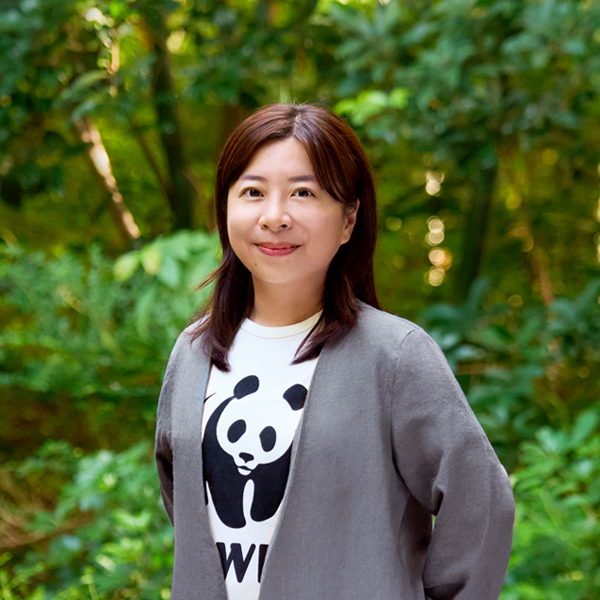
Lydia Pang,

Head,  Oceans Conservation,

WWF-Hong Kong

Q1: Coral restoration draws on both rigorous scientific research and hands-on fieldwork in equal measure. As Thomas moves from an academic research background into frontline conservation, what does that combination bring to WWF's work in Hong Kong's waters?

"Coral restoration is about much more than growing corals or conducting surveys. It requires science, long-term monitoring, adaptive management and, importantly, addressing the root causes of ecosystem degradation. Restoration is most effective when it forms part of a broader strategy to strengthen marine ecosystem resilience.

This is why we value team members who bring a combination of scientific knowledge and hands-on field experience, such as Thomas. A strong research background provides a solid understanding of coral ecology, while restoration fieldwork builds the practical skills needed to tackle real-world conservation challenges. Beyond the technical aspects, connecting different stakeholders, from university researchers and divers to local communities and conservation practitioners, is equally important. This ability to bridge science, fieldwork and collaboration is what helps ensure our conservation work remains both evidence-based and impactful."

Q2: What does it mean for Hong Kong's marine conservation efforts to have young researchers moving from academic institutions into frontline conservation roles?

It is very enjoyable to work alongside passionate young conservationists like Thomas. Not many people can genuinely call the sea their workplace, and we value colleagues who bring that level of enthusiasm for being out in the field, learning from nature, and turning that knowledge into conservation action.

More broadly, it is encouraging to see young researchers choosing careers in conservation. They bring fresh perspectives, new ideas and a willingness to embrace innovation, which are increasingly important as we tackle complex environmental challenges. Conservation also requires people who are prepared to step outside their comfort zones while remaining firmly grounded in science and evidence. Thomas's own journey, from academic research to stakeholder engagement, industry collaboration and frontline conservation work, reflects that mindset well.

A Birdwatcher's Journey

WWF-Hong Kong

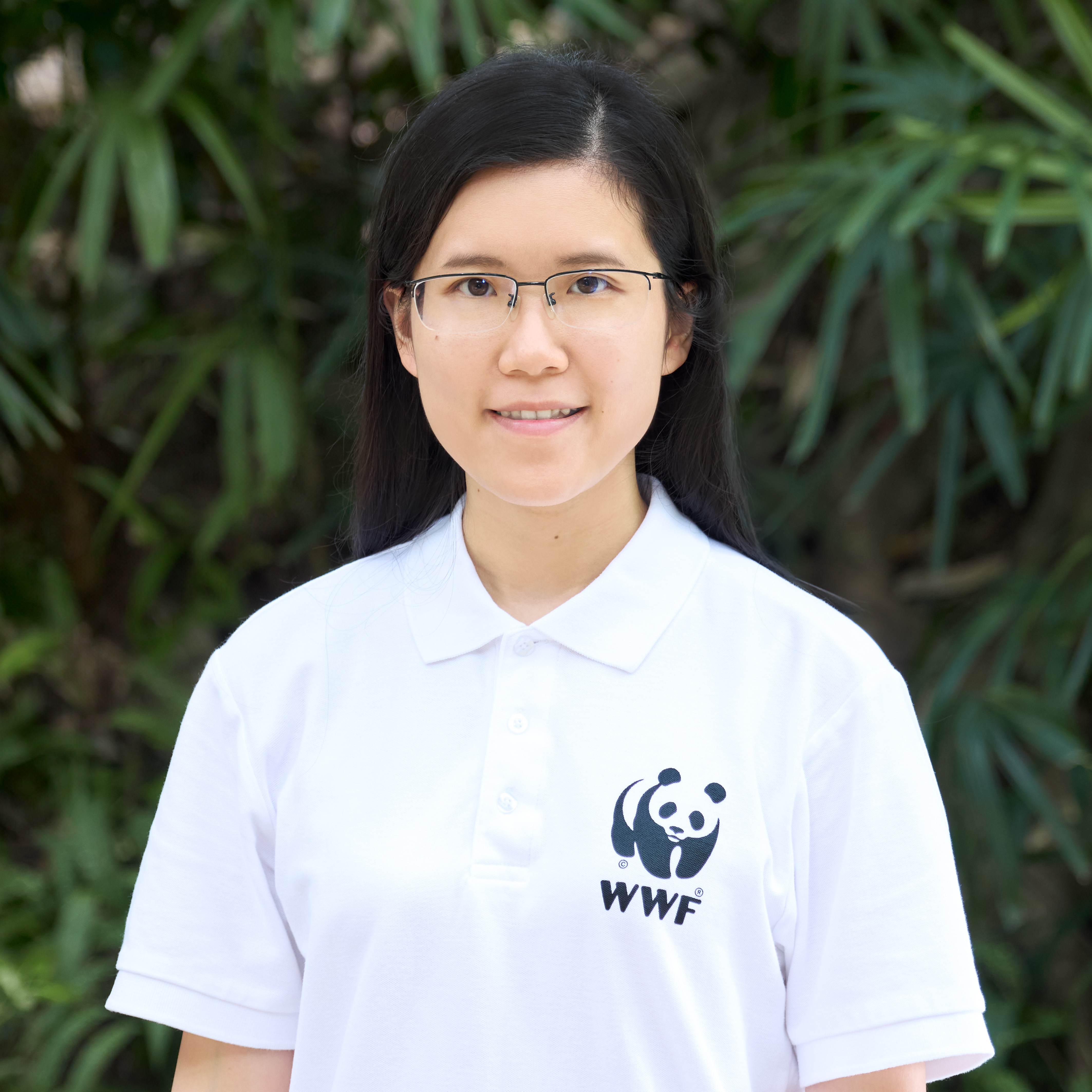
Jackie Xue
Officer, Conservation Research, Wetlands, WWF-Hong Kong

Meet Jackie  

Jackie is an Officer, Conservation Research, with WWF-Hong Kong's Wetlands team. A childhood curiosity about nature blossomed into serious academic pursuit at university, where she joined a birdwatching society while studying in Chengdu, Sichuan, and later carried that interest into a research master's degree focused on waterbirds, earning her MPhil at Beijing Normal University. Along the way, extensive fieldwork across mainland China, grounded in rigorous on-the-ground research, gradually shaped her vision for conservation, particularly in how the needs of wildlife and communities can be balanced. On the strength of that dedication, she went on to join the Mai Po team, embarking on her full-time career in conservation. Today, she coordinates wildlife surveys and bird tracking at Mai Po, and this year also serves as a judge for the Youth Group of our Hong Kong Big Bird Race 2026.

From a Chance Discovery to a Research Path

Q1: Birdwatching became a serious passion for you during your university years. What first drew you to it, and what kept you coming back?

I've had an interest in nature since I was a child, but it wasn't until university, when I joined the birdwatching society in Chengdu, Sichuan, that birdwatching really became a serious passion. Through the society, I was able to meet like-minded students from all over the country, and we went birdwatching together in different regions. Sichuan, being part of China's southwestern mountain ranges, meant I could experience its rich biodiversity first-hand from the very start of my birdwatching journey. But what has really kept me coming back isn't the growth of my life list*, it's the connections I've built with nature, and with people, along the way.  

💡 Life List

A life list is a record of every bird species a bird watcher has accumulated over their lifetime, counting only those they can confidently identify.

Xiamen University

During her university years, Jackie's birdwatching society summer camps connected her with like-minded students from across the country, turning a childhood curiosity into a lasting passion.

Q2: Over the years, you have built up an impressive record of bird sightings across mainland China. Is there a particular encounter or moment in the field that has stayed with you and shaped how you think about conservation?

Interestingly, what has had the most lasting impact on me wasn't actually a moment from fieldwork, it was a book. Not long after I started birdwatching, I came across Invisible Connections: Why Migratory Shorebirds Need the Yellow Sea, published by Wetlands International. Through text and photography, the book documents the close, often invisible connections between migratory shorebirds and the habitats they rely on along the East Asian–Australasian Flyway, as well as the threats those habitats face. It was the first time I truly understood that bird migration isn't a solitary journey, but a network made up of irreplaceable habitats strung along the route. That realisation is what set me on the path toward waterbird research, and later, conservation work.

Wetland International

A chance discovery early in her birdwatching journey, a book documenting the threats facing migratory shorebirds along the Yellow Sea, left a lasting impression on Jackie and pointed her toward waterbird research.

From Research to Practice

Q3: You worked under Professor Zhang Zhengwang at Beijing Normal University, focusing on waterbird research. How did that academic experience shape your approach to conservation science?

Under Professor Zhang Zhengwang's supervision, my research focused mainly on waterbird breeding ecology, and I carried out fieldwork at Nanpu, a wetland with a long history of salt production. There, I noticed that salt farms adjust water levels across different ponds to suit production needs, and that these fluctuations near breeding grounds can directly affect waterbirds' breeding success. But the answer isn't to ask the salt farms to stop production, since these ponds support local livelihoods, and it's precisely their long-standing operation that created the habitat waterbirds now rely on. That led me to consider whether more refined habitat management could maintain the ponds' production function while minimising impact on waterbirds. I later explored some small-scale habitat enhancement approaches, which helped me recognise my own interest in habitat management.

💡 2017–2022 Luannan Nanpu Wetland Conservation Project, Hebei Province

Nanpu wetland, on the northern shore of Bohai Bay, is a critical stop-over site for 350,000 migratory waterbirds, including the Red Knot on its northward migration. Once unprotected by law, the site gained formal protection in 2020 following a conservation project led by WWF, the Paulson Institute, and local government partners, alongside efforts to control invasive vegetation and raise conservation awareness among officials. Learn more

Jackie Xue
Jackie Xue

At Nanpu wetland in Hebei, China, Jackie studied how Pied Avocets nest on salt-pan bunds, and how everyday habitat management must balance the needs of birds, villages and industry.

Jackie Xue

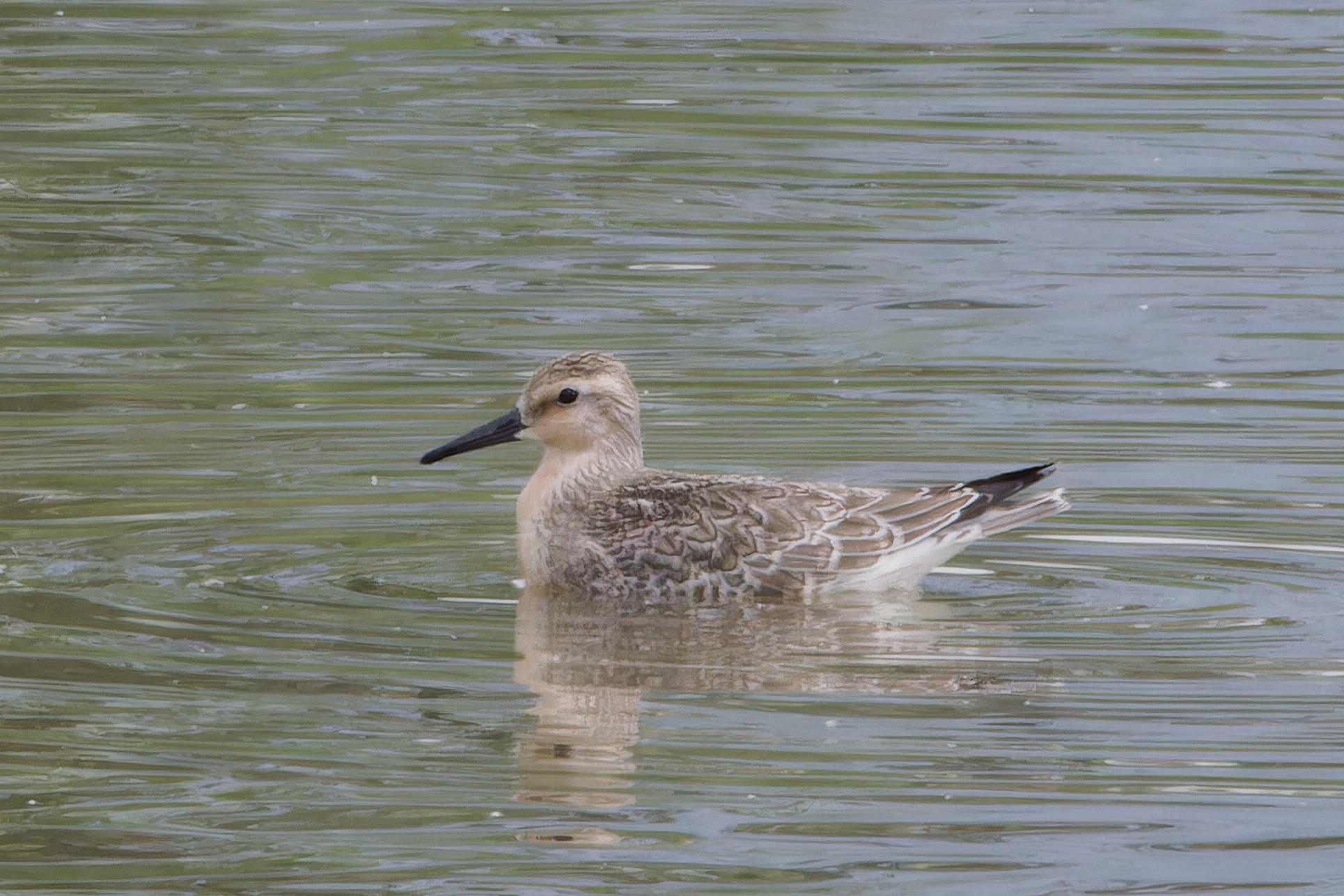
The Red Knot relies on Nanpu wetland as the single most important site on its northward migration, a species whose conservation is closely tied to Jackie's own research there.

Q4: What brought you to WWF-Hong Kong and Mai Po specifically, and how does working in this wetland compare to your experience elsewhere?

My first real understanding of Mai Po came from an online talk by Dr Xianji Wen (Director of Mai Po Nature Reserve and Flyway Programme at WWF-Hong Kong), who explained how gei wai operate and how water buffalo help manage vegetation. That drew me toward this well-known birdwatching hotspot, and sparked a strong interest in a wetland model where conservation and production coexist. Later, I came across a WWF job opening for Conservation Officer at Mai Po that matched my interests and experience closely; my mentor encouraged me to apply, and I feel very fortunate to have ended up here.

My previous work involved more desk-based research, or fieldwork concentrated within specific periods. At Mai Po, I now spend considerable time in the field every month, giving me far more opportunity to observe the wetland's seasonal changes and the effects of different management measures. I've also felt WWF's culture of cross-departmental collaboration here, colleagues exchange ideas and complement each other's roles, helping put conservation ideas into practice together.

YiXi

A talk on Mai Po's gei wai management and water buffalo first sparked Jackie's interest in this semi-artificial, semi-natural wetland, eventually leading her to join the Mai Po team.

Q5: Your work at Mai Po involves coordinating wildlife surveys and bird tracking. What does that look like day-to-day, and what aspects of the wetland's ecology do you find most significant right now?

My day-to-day fieldwork mainly involves bird surveys, bird ringing, and monitoring other species and habitat changes; I also make use of the smart technology already in place at the reserve to improve the accuracy and efficiency of our monitoring work. Beyond fieldwork, I also handle data compilation and analysis, and coordinate survey work carried out by external researchers.

One of the issues I'm currently focused on is how to effectively turn the years of monitoring data Mai Po has accumulated into evidence that can support wetland management decisions, and I think there's still a lot of room to explore in this area. I'm also thinking about how to turn Mai Po's accumulated monitoring and management experience into more practical, transferable approaches that other wetlands can reference and apply, which also aligns with our ongoing work of sharing experience through wetland management training programmes.

Vinicus Yeung

Jackie coordinates monthly bird surveys at Mai Po to track how waterbirds use the wetland's habitats more efficiently.

Advice for the Next Generation of Conservationists

Q6: From a university birdwatcher to a professional conservation researcher, and now a judge for Youth Race at WWF's Big Bird Race 2026, your journey has been an inspiring one. What would you say to young people considering a career in conservation?

For many birdwatchers, it all starts with simply wanting to know the name of the bird in front of them; conservation work doesn't have to begin with a grand ideal either, it can just as well begin with plain curiosity. Working at Mai Po has shown me that conservation needs people from different backgrounds and perspectives, there isn't one "right" way into this field. So my hope is that people don't limit themselves, and that they hold on to a lasting curiosity about the world around them. Over time, these observations build into a distinctive understanding of nature, one that can become a real asset in a future conservation career.

WWF-Hong Kong

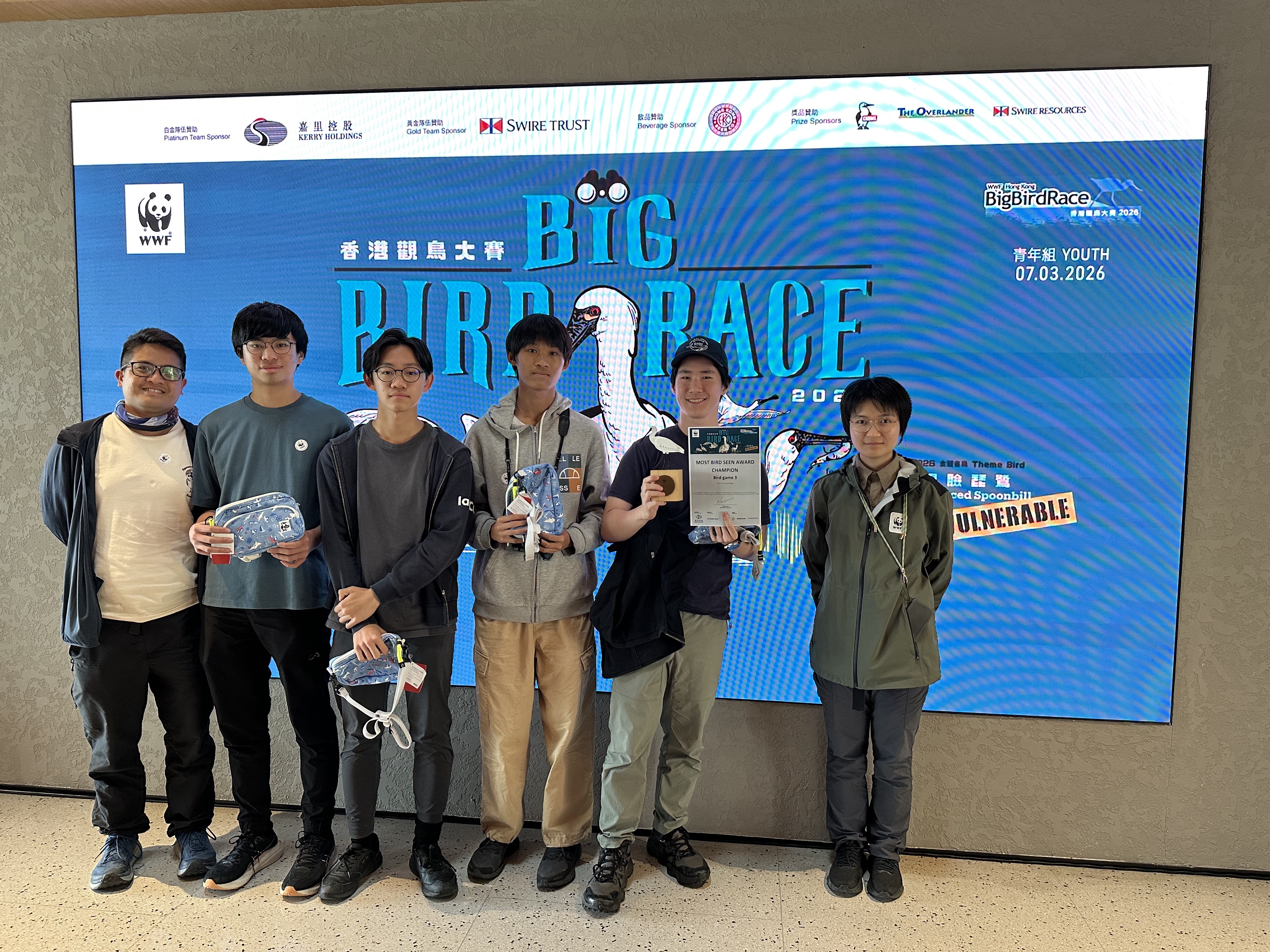
Jackie serves as a judge for the Youth category of the Hong Kong Big Bird Race 2026, hoping to inspire a new wave of young talent into the field of conservation.

A Colleague's Perspective

Dr. Carmen Or

Manager, Conservation Research,

WWF-Hong Kong

Q1: Monitoring migratory birds at Mai Po requires field skills and knowledge of birds in the region. How does having researchers with field experience along the flyway strengthen that work?

With over 400 bird species recorded and tens of thousands of waterbirds visiting every year, Mai Po serves as a critical stopover site and wintering ground for birds along the East Asian–Australasian Flyway. As many of these species are shared with other wetlands along the flyway, knowledge of bird identification, together with strong connections to other experts in the region, is essential for providing reliable data and fostering the information exchange that guides how we manage Mai Po Nature Reserve. Experience from other sites can also inspire new ideas and fresh insights for conservation here.

Q2: What role does rigorous bird recording and tracking play in WWF's wetland conservation strategy at Mai Po?

Through habitat management, research and education, WWF-Hong Kong continuously ensures the Mai Po Nature Reserve as a vital staging and wintering ground for migratory waterbirds along the East Asian–Australasian Flyway, as well as a refuge for threatened species. Long-term monitoring and bird research let us assess how effective our habitat management is and identify where it still needs to improve. That information also strengthens our work with other wetlands to protect threatened species across the flyway, and sharing new scientific findings helps raise public awareness of wetland conservation more broadly.

A Mentor's Perspective

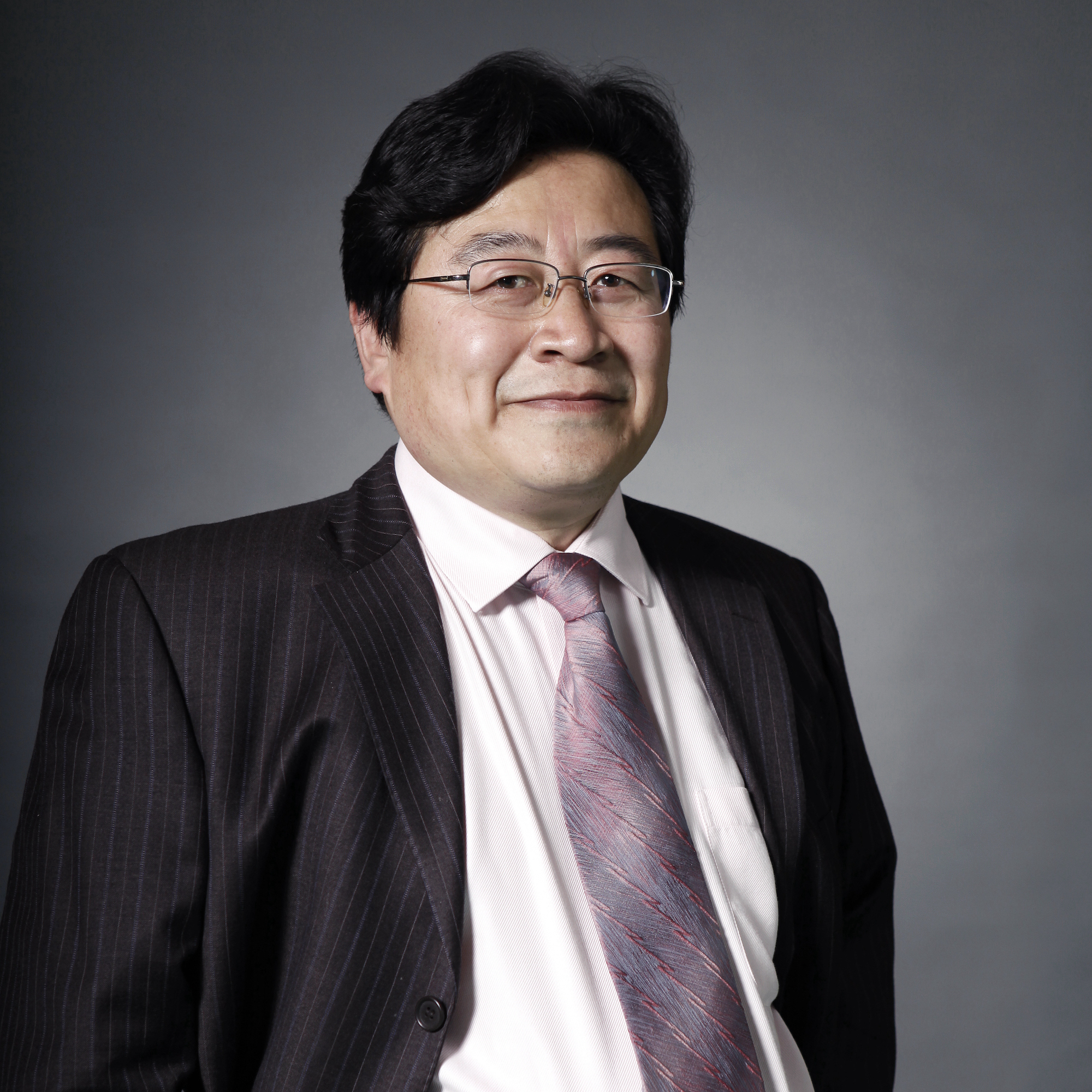
Professor Zhang Zhengwang

Faculty of Ecology,

College of Life Sciences,

Beijing Normal University

Q1: Jackie has transitioned from academic research into frontline conservation work. How do you see a strong scientific grounding in ornithology benefiting the practical work of conservation?

Congratulations to Jackie on joining WWF-Hong Kong! During her postgraduate studies at Beijing Normal University, she not only completed systematic coursework in ornithology, but also spent several years conducting waterbird ecology research at Nanpu, Luannan, in Hebei Province. I believe a strong grounding in ornithology helps with accurate bird identification in the field, and builds an understanding of birds' survival needs and migratory behaviour. This makes practical work such as bird monitoring, rescuing rare species, and running nature education programmes far more effective, and it also provides solid scientific guidance for bird conservation, wetland management, and community-based sustainable development projects.

Q2: As bird conservation grows in global importance, what would you say to young people who are considering a career in this field?

It gives me great pleasure to see more and more young people developing a love for birds, taking up birdwatching, and getting involved in bird conservation. The more young people who care about birds, the more attention and protection birds will receive, and the greater the hope for bird biodiversity conservation. I would like to offer three hopes to young people passionate about birds. First, build a solid foundation in ornithology and strengthen practical bird conservation skills. Second, engage and collaborate more with peers, and gain conservation experience through practice. Third, lead by example: spread the message of caring for and protecting birds, and bring family, colleagues and friends along to join in bird conservation work.  

Share this page